Alltagsheld
Role: Design & UX
Period: 2025
Context: Giving a voice to people who couldn't afford one.
The Problem
Access to legal help shouldn't depend on how much money you have. Millions of people face legal issues they can't afford to fight, not because they're wrong, but because a lawyer is out of reach. We saw an opportunity: large language models had gotten strong enough to change that.
The Mission
Alltagsheld started with one belief: everyone deserves a voice, regardless of their financial situation. We set out to use LLMs to give people access to legal support they'd otherwise never get.
What I Built
I led the brand from the ground up. Brand language, visual identity, the hero concept, the pitch deck, and the research behind all of it. Every part of Alltagsheld had to communicate the same thing: this is for the people the system usually leaves behind.


The Pivot
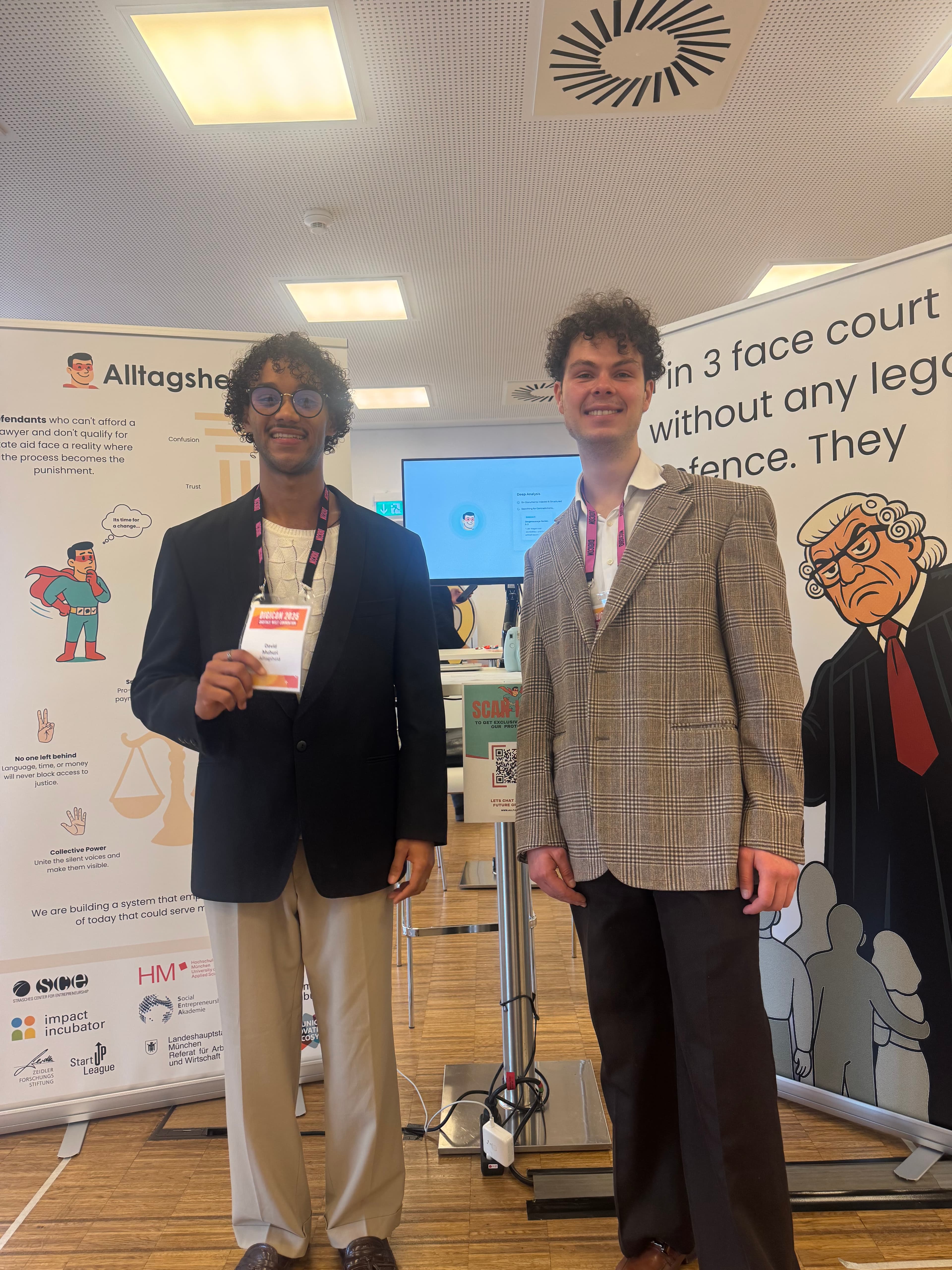
Early on, it became clear that a standalone legal tool for consumers couldn't work. Legal advice is regulated for good reason, and a pure AI tool wouldn't be compliant on its own. So we pivoted: instead of replacing lawyers, we built a tool for the good lawyers already doing this work. Our demo automatically detected objections (Widersprüche) and structured case files, cutting down the manual work that keeps overburdened lawyers from taking on more of these cases.
The Recognition
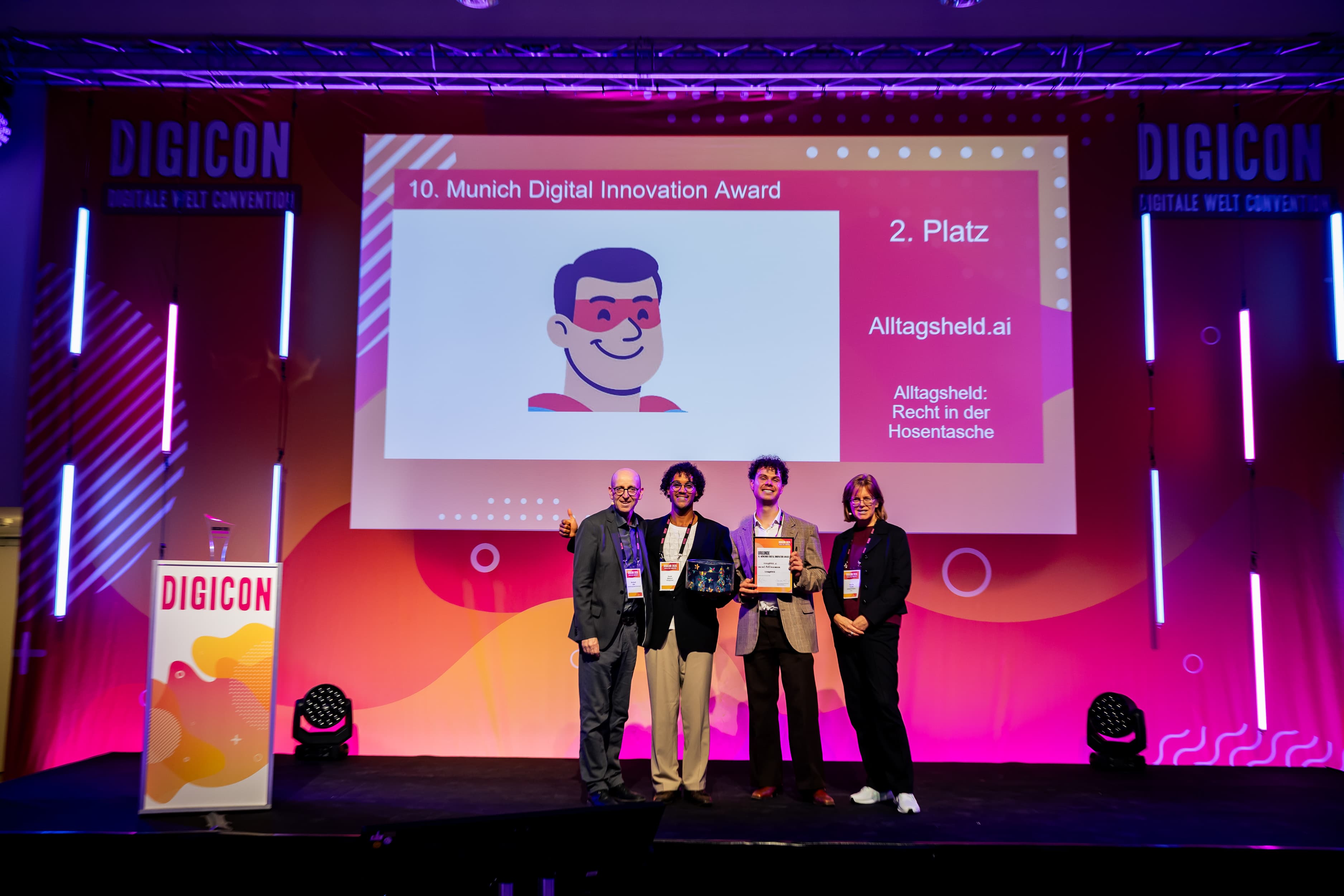
We placed 2nd at the Digicon Award.
Why We Closed It
Building the brand and the vision was the easy part. What we didn't have was deep legal expertise, and that gap became harder to close the further we went. A hiring conversation with a lawyer we hoped would join us ended in a rejection, and it was the moment that made the real problem clear: we weren't lawyers, and this venture needed people who were. We made the call to close Alltagsheld and change direction.